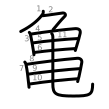
Japanese Symbol for
亀kame
turtle · longevity · good fortune
Turtle, tortoise. 亀 (kame) is one of Japan's most powerful good luck symbols — representing longevity, wisdom, and perseverance. The saying 鶴は千年、亀は万年 (tsuru wa sennen, kame wa mannen — cranes live 1000 years, turtles 10,000) expresses this belief.
鶴亀
tsurukame
crane and turtle (ultimate longevity pair)
亀甲
kikko
tortoiseshell pattern (hexagonal)
浦島太郎
Urashima Tarō
folk hero who rides a turtle to the sea palace
海亀
umigame
sea turtle
亀の甲より年の功
kame no kō yori toshi no kō
experience outweighs theory (age over turtle shell)
亀裂
kiretsu
crack, fissure (turtle-shell cracks)
浦島太郎 (Urashima Tarō) — Japan's most famous folk tale — features a fisherman who rescues a turtle and is taken to the dragon's undersea palace (龍宮城 — Ryūgū-jō) as a reward. The story is Japan's version of Rip Van Winkle, exploring the themes of time, gratitude, and the consequences of curiosity.
Hiragana and katakana are the keys to reading Japanese. Our free trainers get them locked in fast.