Japanese Symbol for
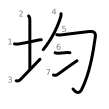
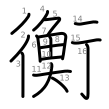
均衡kinkō
balance · equilibrium · symmetry
Balance, equilibrium, symmetry. 均衡 is the formal word. In daily speech, 釣り合い (tsuriai — balance, being well-matched) and バランス (baransu — balance, loanword) are more commonly used.
釣り合い
tsuriai
balance, equilibrium, harmony
調和
chōwa
harmony, balance, accord
陰陽
in'yō / onmyō
yin and yang (dark and light balance)
間
ma
space, pause, interval (aesthetic balance)
中庸
chūyō
the middle way, moderation
侘び寂び
wabi-sabi
beauty in imbalance and imperfection
陰陽 (in'yō — yin and yang) represents the ultimate balance in East Asian philosophy: every phenomenon has its complementary opposite, and harmony comes from their dynamic equilibrium. The Japanese aesthetic 間 (ma — negative space/pause) reflects balance through what is absent. Interestingly, 侘び寂び (wabi-sabi) finds beauty in deliberate imbalance — the perfectly imperfect bowl, the asymmetric garden.
Hiragana and katakana are the keys to reading Japanese. Our free trainers get them locked in fast.