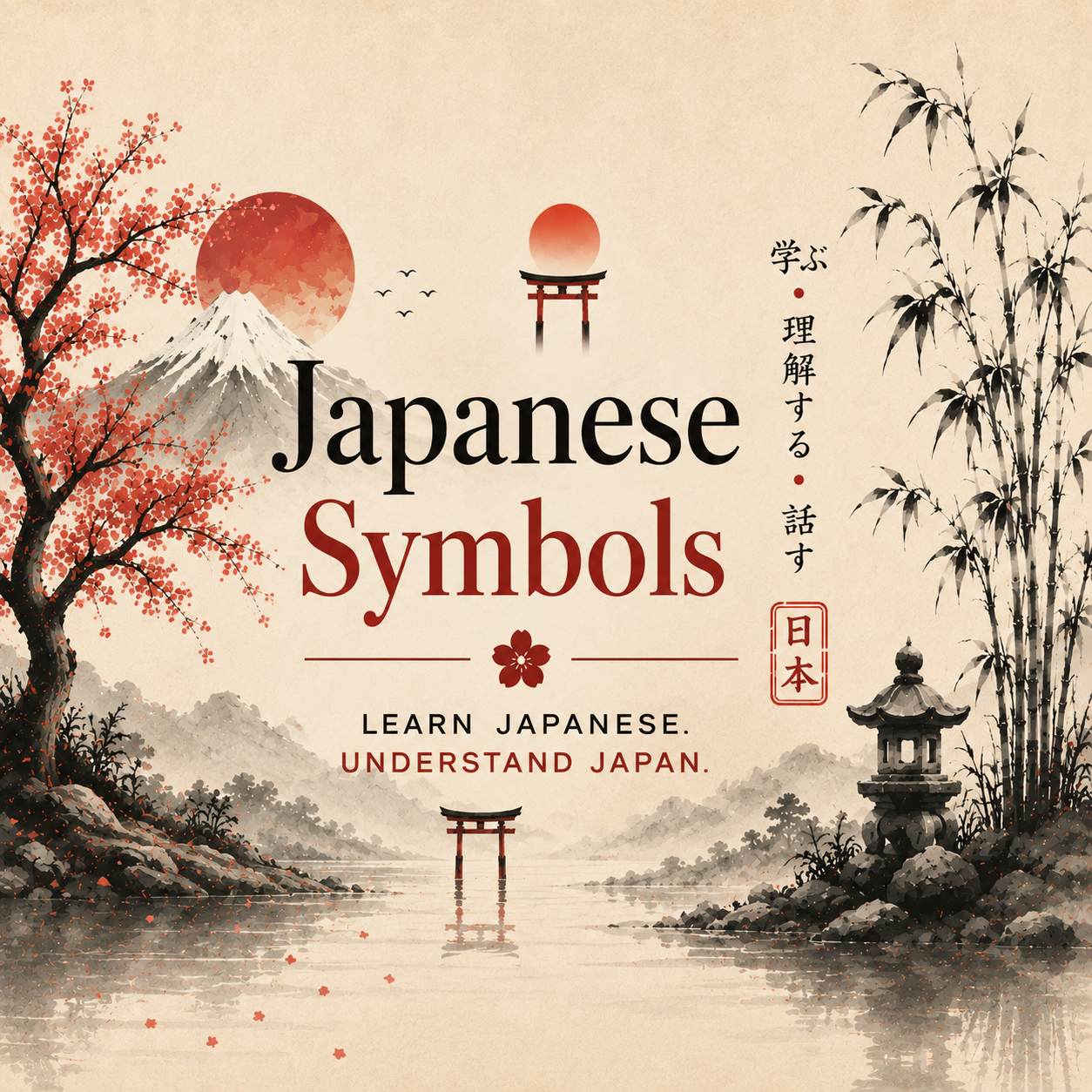
Why nature matters so much in Japanese culture
Japan is a mountainous archipelago with four strongly distinct seasons — dramatic enough that the seasonal transition is a national event. Cherry blossoms in spring, typhoons in summer, red maples in autumn, heavy snow in winter: these aren't backdrop, they're the calendar.
Shinto — Japan's indigenous spiritual tradition — sees kami (divine spirits) in every natural feature: mountains, rivers, trees, stones, the wind. This reverence for nature permeates Japanese aesthetics, poetry, food culture, and everyday language.
The four seasons
haru / shun
Spring — the most celebrated season
Cherry blossoms (桜 — sakura), new school years, new fiscal years — spring in Japan is synonymous with beginnings. 青春 (seishun — "blue spring") means youth. The Japan Meteorological Agency tracks the 桜前線 (sakura zensen — cherry blossom front) as it moves northward each year. National news.
natsu / ka
Summer — the festival season
Hot, humid, and intensely cultural. Summer brings 祭り (matsuri — festivals), 花火大会 (hanabi taikai — fireworks festivals), and お盆 (Obon) — when ancestors return. The cicadas (蝉 — semi) screaming in the heat are the sound of Japanese summer in every novel, anime, and film set in the season.
aki / shū
Autumn — the season of appetite
Japan tracks 紅葉 (kōyō — autumn foliage) as obsessively as cherry blossoms. 食欲の秋 (shokuyoku no aki — "autumn of appetite") reflects the harvest abundance: chestnuts, mushrooms, pacific saury. Moon viewing (お月見 — o-tsukimi) happens in mid-autumn, with rice dumplings arranged under the full moon.
fuyu / tō
Winter — the season of hot springs and New Year
Winter culminates in Japan's most important holiday — 正月 (shōgatsu — New Year). 温泉 (onsen — hot springs), 鍋 (nabe — hot pot), and 除夜の鐘 (joya no kane — the 108 New Year's Eve bell strikes) define the season. Heavy snow falls in Hokkaido and along the Japan Sea coast.
Essential nature symbols
sakura
Cherry Blossom — Japan's national symbol
The ultimate symbol of beauty, transience, and new beginnings. Cherry blossom season lasts roughly two weeks — its brevity is the point. The Japanese concept of 物の哀れ (mono no aware — the bittersweet beauty of impermanence) is most purely expressed by falling cherry petals.
tsuki / getsu
Moon — the poet's constant companion
The moon appears in more Japanese haiku than any other subject. Moon viewing (月見 — tsukimi) is an autumn tradition. 三日月 (mikazuki — three-day moon/crescent) is one of Japanese's most evocative compound words. The moon also means "month" — time measured by its phases.
yama / san
Mountain — the sacred and the practical
Japan is 73% mountains. 富士山 (Fujisan — Mt. Fuji) is the national symbol. Mountains are sacred in Shinto — kami inhabit peaks and forests. Mountain worship (山岳信仰 — sangaku shinkō) is still practiced at sacred peaks like Kōyasan and Mt. Ōmine.
umi / kai
Ocean — Japan's defining geography
Japan is an island nation — the sea defines everything. 海外 (kaigai — overseas) literally means "beyond the sea." The traditional 海女 (ama — female free divers) who harvest abalone and pearls have practiced their craft for 2,000 years. Japanese cuisine is inseparable from the sea.
kaze / fū
Wind — and "Japanese style"
風 (kaze) means wind but also "style" or "manner" in compounds — 和風 (wafū) means Japanese-style. 台風 (taifū — typhoon) dominates late summer. The 神風 (kamikaze — divine wind) that scattered the Mongol invasion fleet in 1281 is one of Japanese history's most famous events.
ame / u
Rain — Japan has over 50 words for it
Japan's rice-farming heritage gives rain enormous cultural weight. 梅雨 (tsuyu — plum rain / rainy season) is a meteorological phenomenon in June-July covering the whole country. 春雨 (harusame — spring rain) is the same word as a type of glass noodle. 雨音 (amaoto — the sound of rain) is considered beautiful and soothing.
The five classical elements
Traditional East Asian philosophy recognized five elements (五行 — gogyō): 木 (ki — wood), 火 (hi — fire), 土 (tsuchi — earth), 金 (kin — metal), and 水 (mizu — water). Each corresponds to a season, a direction, a colour, an organ, and a flavour. The days of the week in Japanese are named after them — 月曜日 (moon/Monday), 火曜日 (fire/Tuesday), 水曜日 (water/Wednesday), 木曜日 (wood/Thursday), 金曜日 (metal/Friday) — plus 土 (earth/Saturday) and 日 (sun/Sunday).